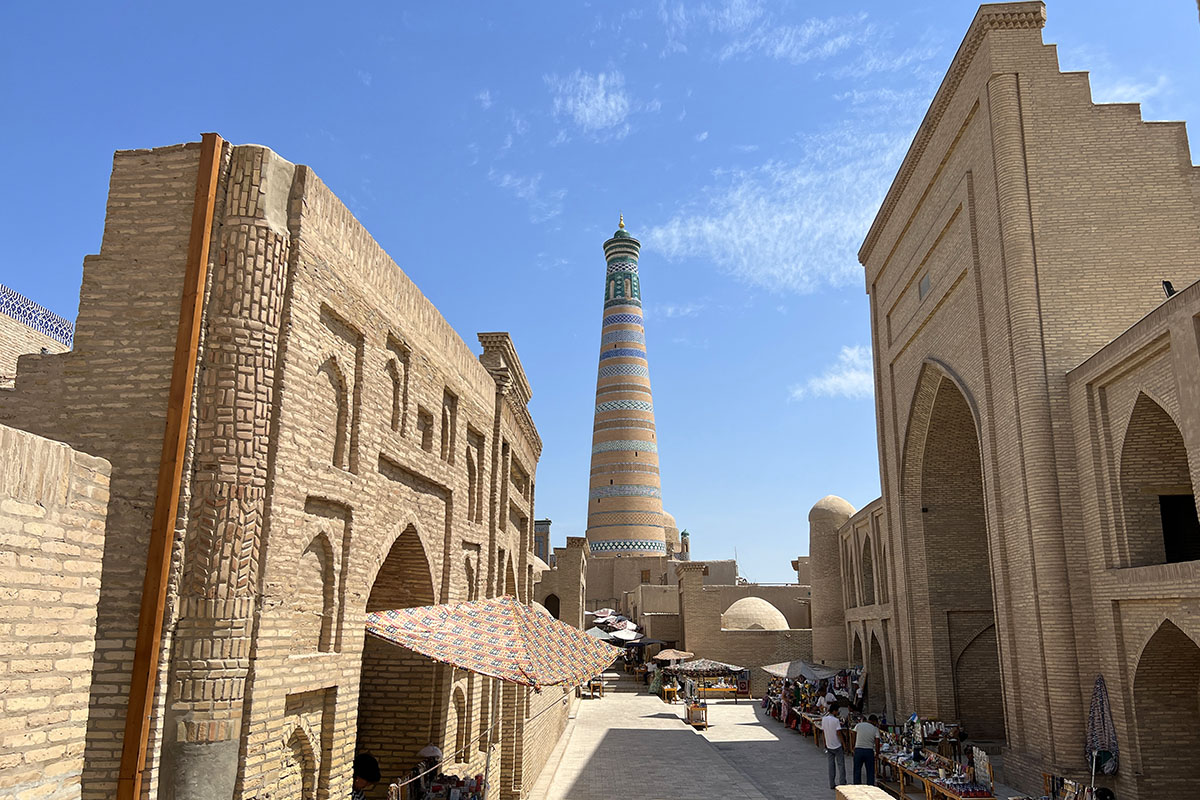
Exploring Uzbekistan’s Open-Air Museum: 2 Days in Khiva Itinerary
Exploring Khiva in 2 days: The Ultimate Itinerary
Khiva, an oasis and ancient city in Uzbekistan is a UNESCO World Heritage site that offers a journey back in time. This 2-day itinerary will help you explore the best of Khiva, from its iconic minarets to its rich Uzbek culture.
Khiva has a magical feel to it with so much to see. Old Khiva is an open-air museum and is one of the most incredible places to visit in Uzbekistan.
Khiva is not as frequented by tourists as Samarkand and Bukhara are, but I would absolutely recommend spending time in Khiva. Within the city walls it feels very ethereal. You will not regret spending time in this beautiful city.
Why Visit Khiva?
– A well-preserved Silk Road city steeped in ancient history
– Enclosed within the UNESCO-listed Ichan Kala, Khiva’s old town is like an open-air museum
– Stunning examples of Islamic architecture, with minarets, madrassas, and palaces
Khiva is a must-visit for those exploring Uzbekistan’s historic Silk Road cities. Its old town, Ichan Kala, is a living museum surrounded by formidable walls, offering an immersive glimpse into the past.
Unlike the hustle of Bukhara and Samarkand, Khiva’s compact size allows visitors to explore its treasures at a leisurely pace, with its architectural wonders, rich history, and tranquil atmosphere making it a highlight of any Uzbekistan itinerary.
Getting to Khiva
From Tashkent, the easiest and quickest way is to get a flight to Urgench and then a transfer service to Khiva. Urgench Airport will have taxis waiting for each flight to arrive. However, the prices are high! It’s better to book a car through your hotel. It saves money and stress!
You can get the train from Tashkent, but it will take some time. It’s best to fly to Khiva and make your way back to Taskent on the train, city by city.
Day 1: Immerse Yourself in Khiva’s Old Town (Ichan Kala)
If you stayed the previous night at a hotel within the city walls, you can start your day nice and early, before all the tourists arrive. See the sun rise on some of the more popular buildings, like the Minor Minaret.
Once the ticket office opens, purchase your ticket for the attractions. The ticket costs 150.000 som and is for two days and will get you into a number of sites. It does not cover every site within Ichan Kala, so you may be required to pay a small fee to enter some of the sites.
Now, are you ready to explore the many mosques and minarets and madrasah? Let’s go!
Morning
1. Start at the West Gate (30 minutes)
– Enter through Ata Darvoza into the walled city of Ichan Kala
– Appreciate the view of the city’s defensive walls and the surrounding desert landscape
– Purchase a combined ticket for attractions
– Cost: 150.000 som
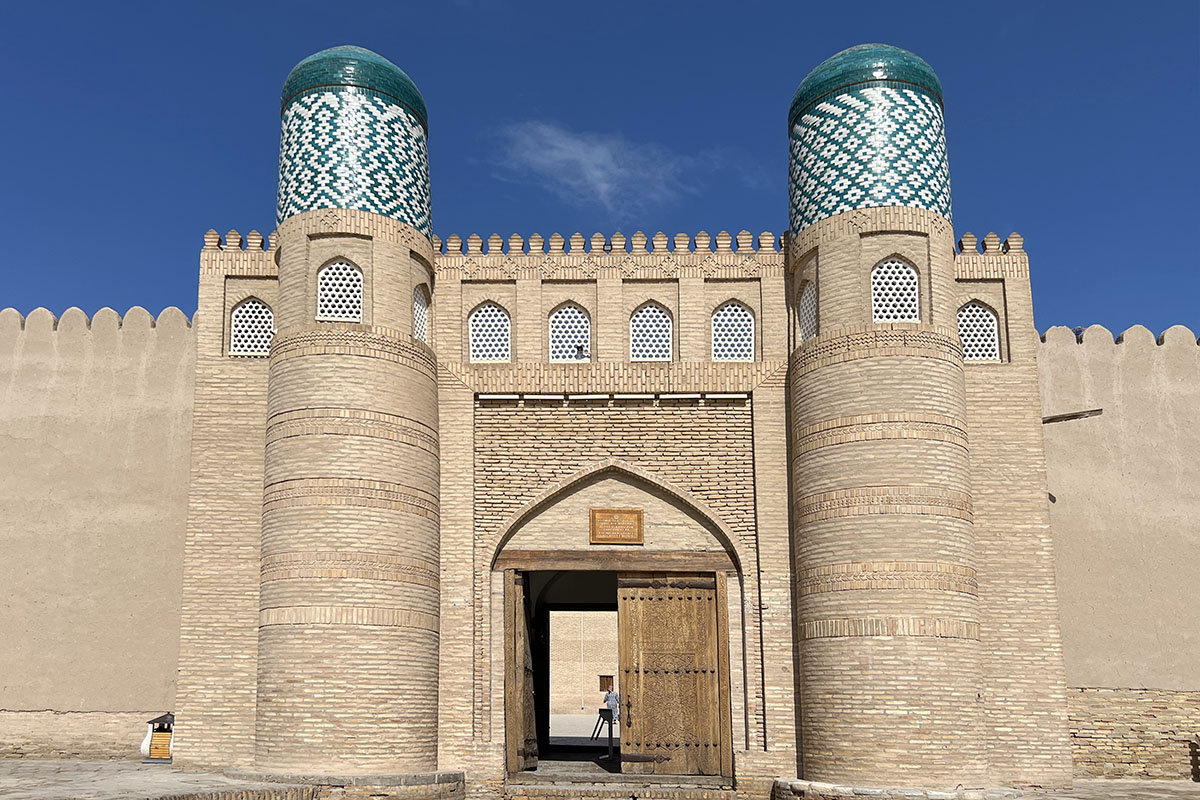
As you step through the imposing Ata Darvoza, or West Gate, you’re transported back in time to the days of the Silk Road. This main entrance to Ichan Kala, the inner walled city of Khiva, has witnessed centuries of traders, travellers, and conquerors passing through its archway.
The gate’s sturdy wooden doors, reinforced with iron, speak to Khiva’s tumultuous history and the need for defence against invaders.
Before venturing further, be sure to purchase the combined ticket for attractions at the booth near the gate. This all-inclusive pass will grant you access to most of Khiva’s major sites, saving you both time and money as you explore this UNESCO World Heritage site.
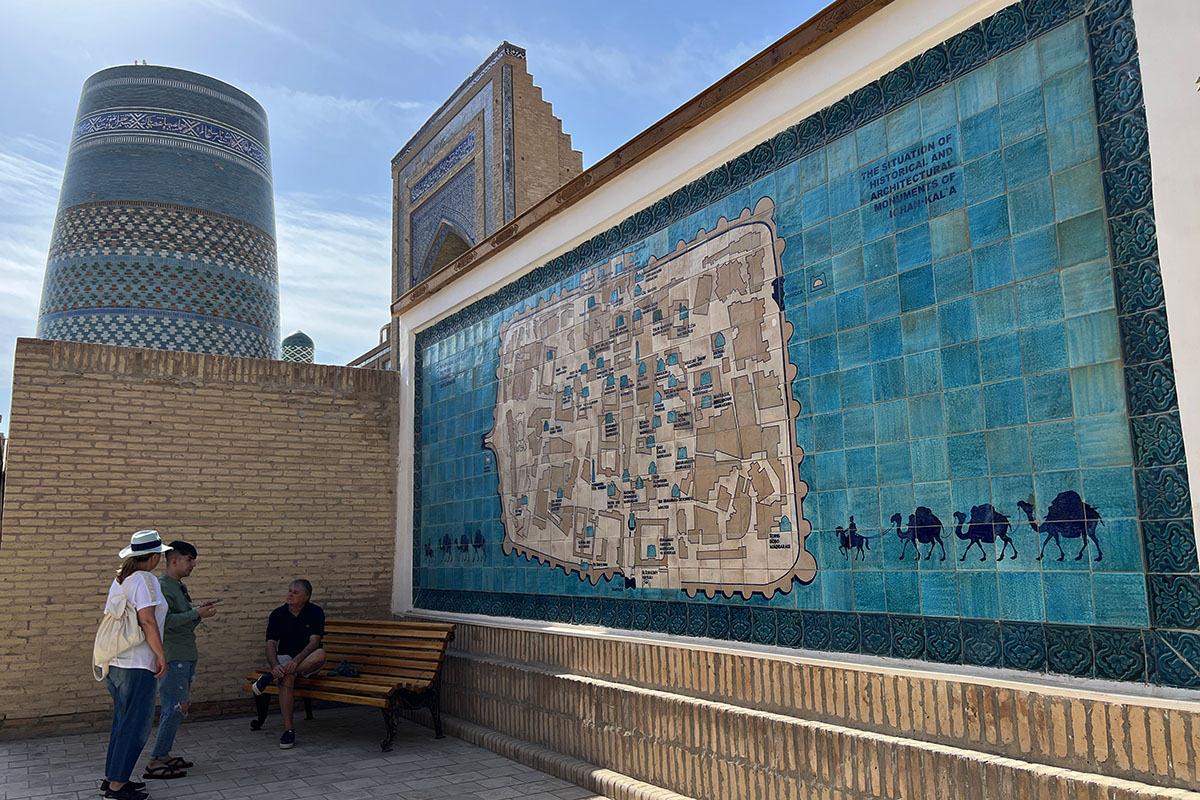
As you walk through the entrance you will be greeted with the most spectacular tiled map of the city. You will also be right near the camel statues which make for a wonderful photo opportunity. Take your time here and soak up the atmosphere. You’re about to embark on an unforgettable experience.
2. Explore the Kalta Minor Minaret (30 mins)
– Marvel at the stunning Majolica tiles
– Construction started in 1851 and halted in 1855
– Learn about its unfinished history
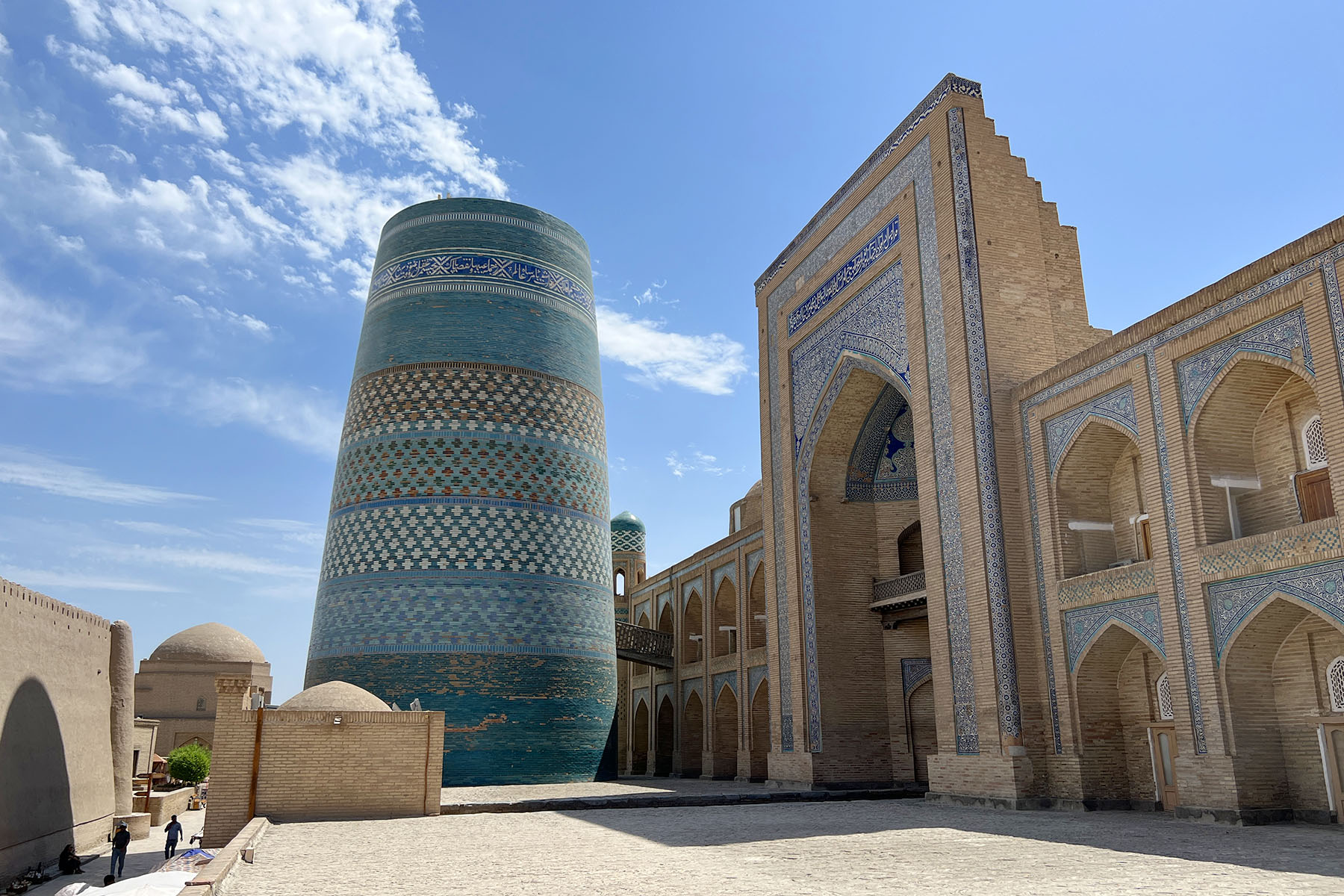
The Kalta Minor Minaret, with its dazzling blue tiles, is arguably Khiva’s most iconic landmark. Standing at only 29 meters tall, this unfinished minaret was intended to be the tallest in Central Asia, reaching a height of 70-80 meters.
Construction began in 1851 under the orders of Muhammad Amin Khan, who wanted to build a minaret so high he could see all the way to Bukhara.
Legend has it that when the Emir of Bukhara heard about this grand project, he sent assassins to kill the architect to prevent its completion. Whether true or not, the minaret was left unfinished when the Khan passed away in 1855, leaving us with the stunning “short minaret” we see today.
Its intricate Majolica tilework, featuring complex geometric patterns in shades of blue, turquoise, and white, makes it a photographer’s dream.
3. Visit the Kuhna Ark Fortress (1 hour)
– Explore the former residence of Khiva’s Khans
– Learn about the Khorezm history in the museum
– Climb the watchtower for panoramic views
The Kuhna Ark, or “Old Fortress,” served as the Khiva Khans’ residence and seat of power for centuries. This citadel within a citadel offers a fascinating glimpse into the lives of Khiva’s rulers. As you explore its maze-like corridors and courtyards, you’ll encounter the Khan’s reception hall, mint, harem, and the summer and winter mosques.
Make sure to climb the watchtower, where Khans once watched for approaching enemies. The entrance to the stairs is easy to miss, so make sure to look out for a small door leading to a steep staircase.
Today, the watchtower offers panoramic views of Ichan Kala and beyond, providing a perfect vantage point to appreciate Khiva’s architectural splendour. The sight of minarets and madrasahs rising above the old city walls is truly unforgettable.
4. See the Mohammed Rakhim Khan Madrassah (30 mins)
– Building commenced in 1871 and finished in 1876
– Now a museum featuring information on the Khivan Khanate
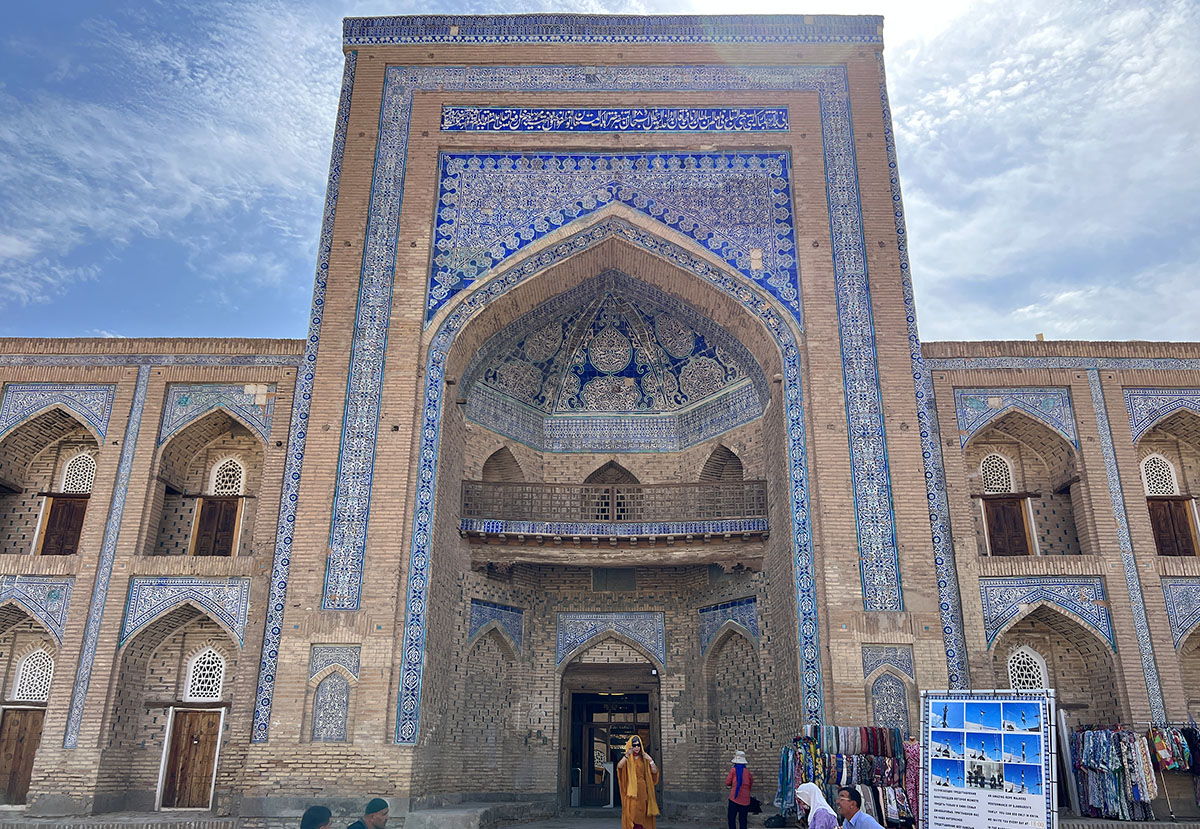
The Mohammed Rakhim Khan Madrassah, built in 1871 by the Khivan ruler Mohammed Rakhim II, is a notable example of the architectural and educational grandeur of the Khiva Khans. This madrassah was constructed as part of the ruler’s efforts to expand the city’s educational institutions and to demonstrate his wealth and power.
The madrassah offers a glimpse into the region’s educational history and provides a serene environment to appreciate the rich cultural heritage of Khiva.
Inside is now the Museum of Khorezm Khans which proudly displays artefacts and information on the Khivan Khanate history and culture.
Ichan Kala Tour Option
Instead of seeing all these locations by yourself, why not book a tour with a guide? You’ll get a much more in-depth experience by using a guide.
This tour will take you to all the important locations within the city walls. Check it out below.
Afternoon
5. Lunch
– Eat at one of the many teahouses
– Taste the amazing Uzbek cuisine
You will find many restaurants and eateries within the walls of the old city which will serve some of the best local cuisine in Khiva.
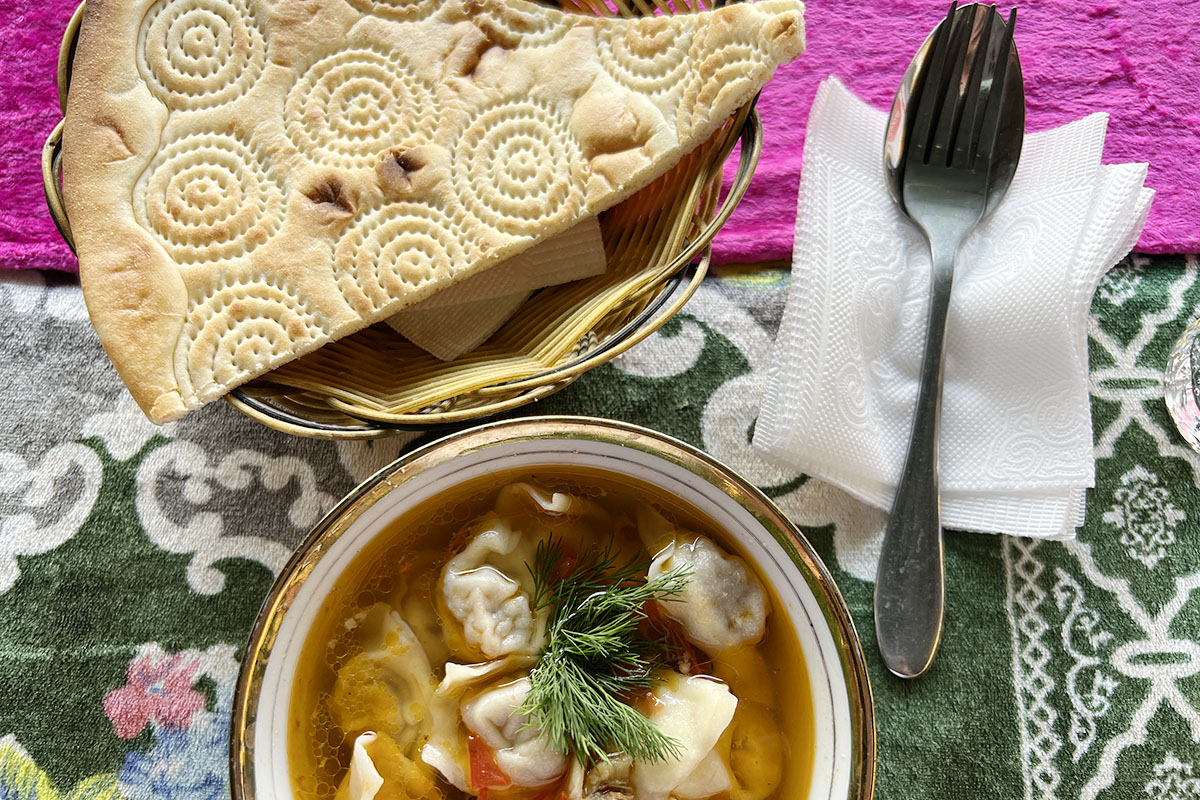
For lunch, I ate at Teahouse Farrukh. Here they serve a delicious variety of meals. I ordered the Shurpa Barak, which consisted of lamb dumplings in broth. The meal was scrumptious and so filling.
6. Explore Uzbek Craftsman Workshops (30 mins)
– Watch artisans create traditional handicrafts
– Purchase unique souvenirs
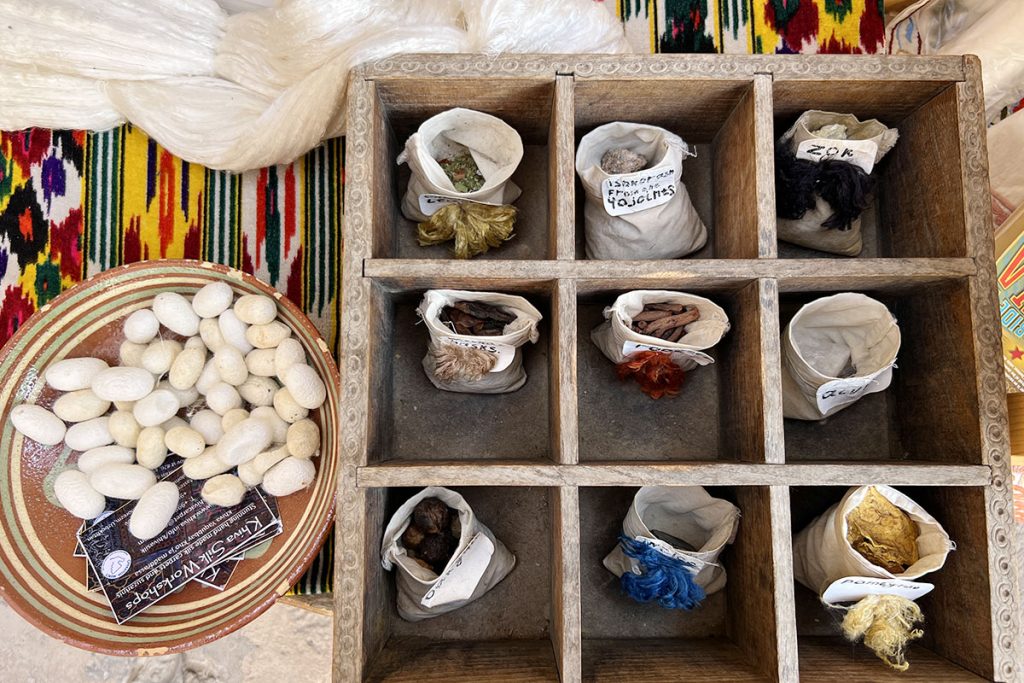
Khiva has long been renowned for its skilled artisans, and a visit to the city’s craftsman workshops offers a chance to see these traditions in action. Wander through the streets of the old town, and you’ll come across workshops specializing in wood carving, carpet weaving, silk embroidery, and pottery.
Watch as master craftsmen create intricate designs using techniques passed down through generations. Many workshops welcome visitors and offer the opportunity to purchase unique, handmade souvenirs directly from the artisans. It’s a wonderful way to support local traditions and take home a piece of Khiva’s living heritage.
7. Sherg’ozixon Madrasasi (30 mins)
– Renowned for educating famous poets and scholars
– Associated with the tragic story of Shergazi Khan’s death
– Now a museum
The Sherg’ozixon Madrasah, also known as the Shergazi Khan Madrasah, is one of the oldest educational institutions in Khiva, dating back to the early 18th century. It was constructed under the rule of Shergazi Khan, after his conquest of Khorasan. The madrasah stands out for its historical significance, having educated prominent poets and scholars from the region. Its architectural design, though simple compared to other Khiva monuments, reflects its early construction era. Notably, the entrance is below street level due to natural subsidence over time.
Visitors to the Sherg’ozixon Madrasah are drawn by its rich history and stories of its construction. The tragic tale of Shergazi Khan’s death at the hands of slaves, whom he had promised freedom upon completing the building, adds intrigue to the site. The madrasah is also admired for its role in shaping intellectual life in the region, earning it the nickname “abode of the educated.” Today, it remains a symbol of Khiva’s rich cultural heritage, making it a must-visit for history enthusiasts.
8. Visit Pahlavan Mahmud Mausoleum (30 mins)
– Learn about Khiva’s patron saint
– Sit and observe the beautiful tiles in the mausoleum
– Visit the other beautifully decorated tombs that are here
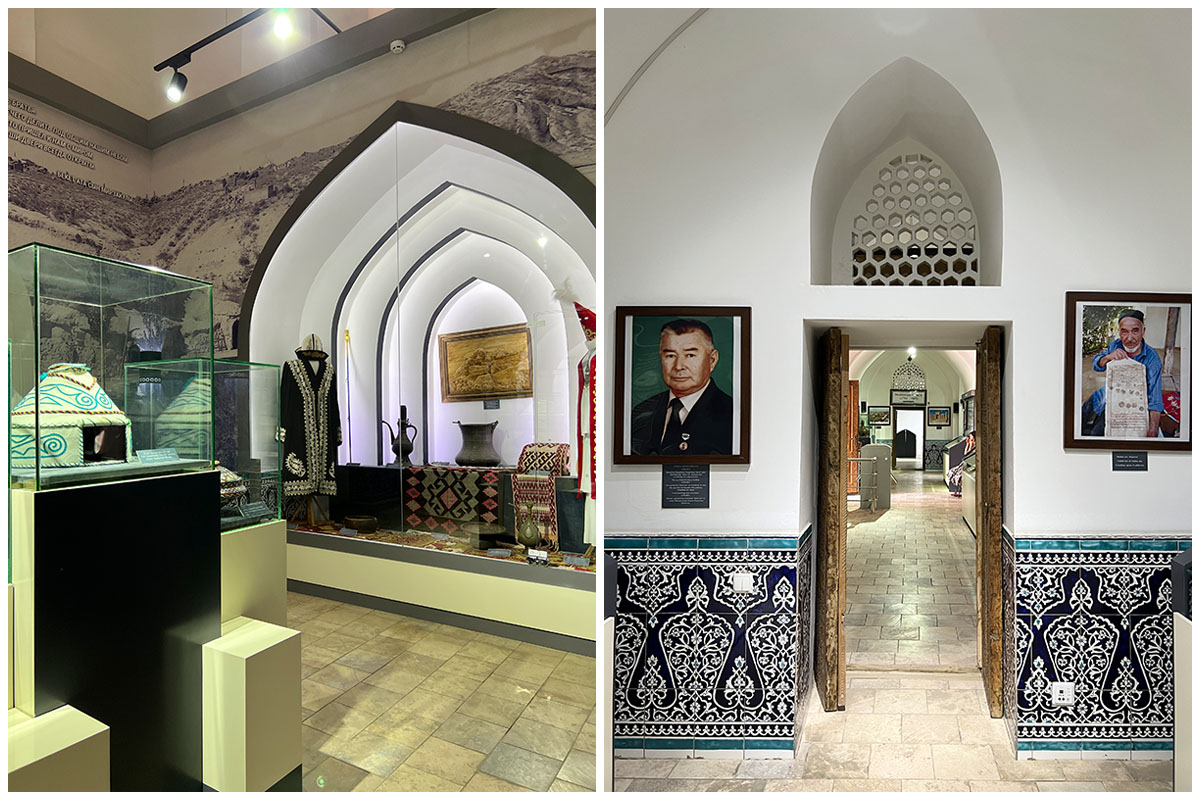
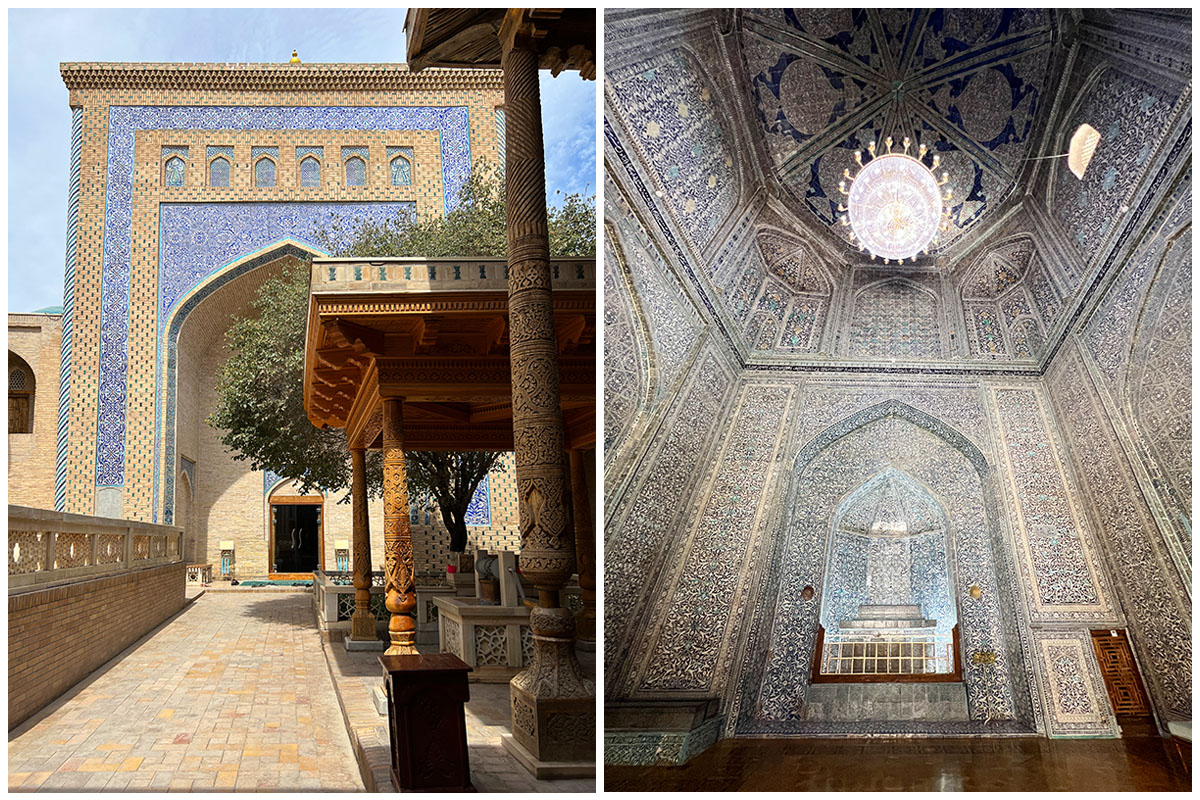
Next, pay a visit to the Pahlavan Mahmoud Mausoleum, dedicated to Khiva’s patron saint. Pahlavan Mahmud was a poet, philosopher, and legendary wrestler who lived in the 14th century. His tomb became a place of pilgrimage, and over the centuries, a grand mausoleum complex grew around it.
The mausoleum’s azure dome, rising above the old city, is one of Khiva’s most recognizable landmarks. Inside, you’ll find a serene space adorned with intricate tilework and calligraphy. The main chamber houses Pahlavan Mahmud’s tomb, covered in elaborate majolica tiles. Take a moment to appreciate the peaceful atmosphere and the devotion of the pilgrims who still come to pay their respects.
9. Islom Xo‘ja Madrasasi (30 minutes)
– Home to a museum on Khiva’s history and the reforms of Islam Khodja
– Its stunning tilework and serene courtyards make it a peaceful and educational visit
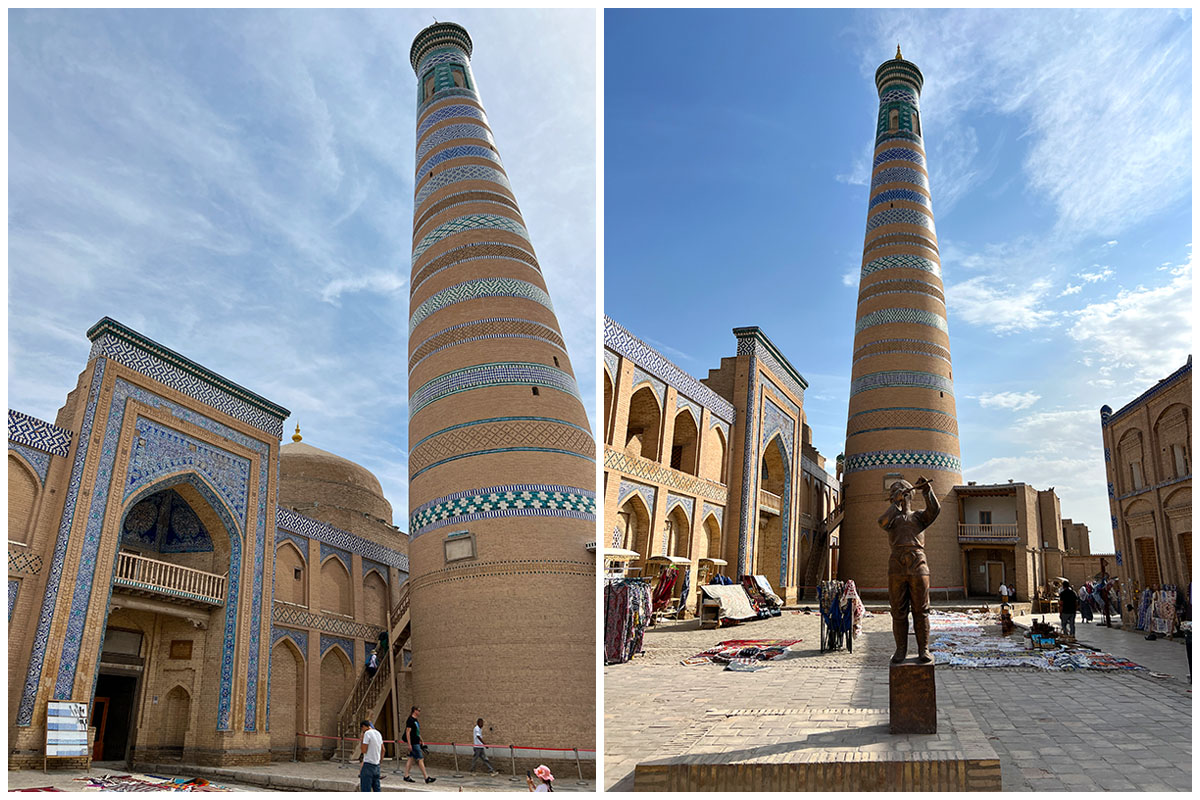
The Islom Xo‘ja Madrasasi is one of Khiva’s architectural gems, constructed in 1910 under the guidance of Islam Khodja, the grand vizier of Khiva. The madrasah is part of a larger complex that includes the Islom Xo‘ja Minaret, the tallest structure in Khiva, standing at 57 meters. The combination of the madrasah and the towering minaret creates a stunning visual contrast between traditional Islamic architecture and the newer, more modern designs of the early 20th century.
Visitors are drawn to the Islom Xo‘ja Madrasasi not only for its architectural beauty but also for its historical significance. The building represents a period of reform in Khiva, initiated by Islam Khodja, who sought to modernize the city while preserving its cultural heritage. The madrasah features beautiful tilework, arched corridors, and serene courtyards that offer a peaceful atmosphere, providing insight into the educational practices and religious life of that era.
The madrasah is also home to a museum that showcases various aspects of Uzbek history, particularly focusing on the period of Islam Khodja’s reforms. Visitors can explore exhibits highlighting Khiva’s cultural and political history, making it a must-see for history enthusiasts.
10. Tour the Juma Mosque (30 mins)
– Admire the 200+ unique wooden pillars
– Learn about its significance in Uzbek Islamic history
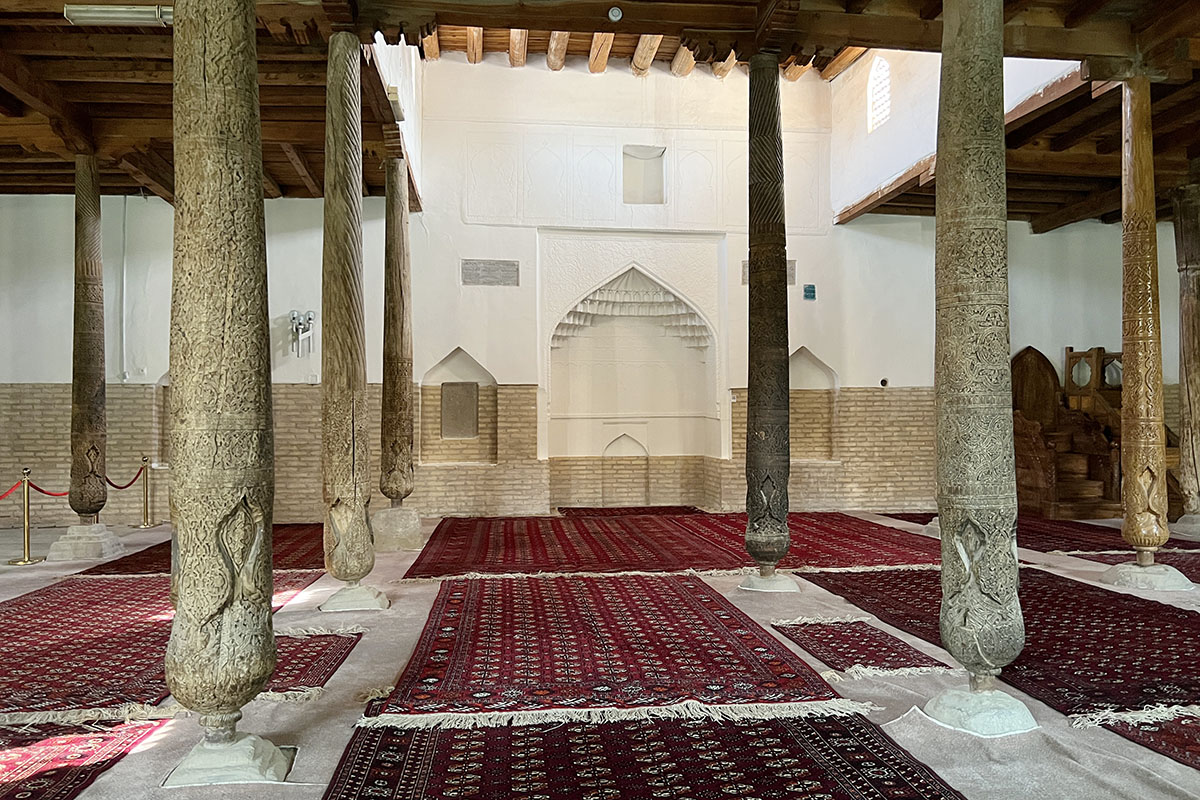
The Juma Mosque, or Friday Mosque, is unlike any other you’re likely to encounter. Instead of the typical domed ceiling, this 10th-century mosque features a flat wooden roof supported by 213 intricately carved wooden pillars. Each pillar tells a story, with some dating back to the 10th century and others added over subsequent centuries, creating a living timeline of Khiva’s history.
The mosque’s design, reminiscent of ancient Arabian mosques, allows shafts of light to filter through its skylights, creating an almost ethereal atmosphere. As you wander among the forest of columns, take a moment to appreciate the skilled craftsmanship and the mosque’s significance in Uzbek Islamic history. It’s not just a place of worship, but a testament to Khiva’s enduring cultural heritage.
11. Matpana Baya Madrassah (Museum of Scholars) (30 mins)
– Matpana Baya Madrasah, built in the early 1900s, now houses the Museum of Scholars
– Exhibits focus on Khiva’s intellectual heritage in fields like literature and science
– Additional fee to enter
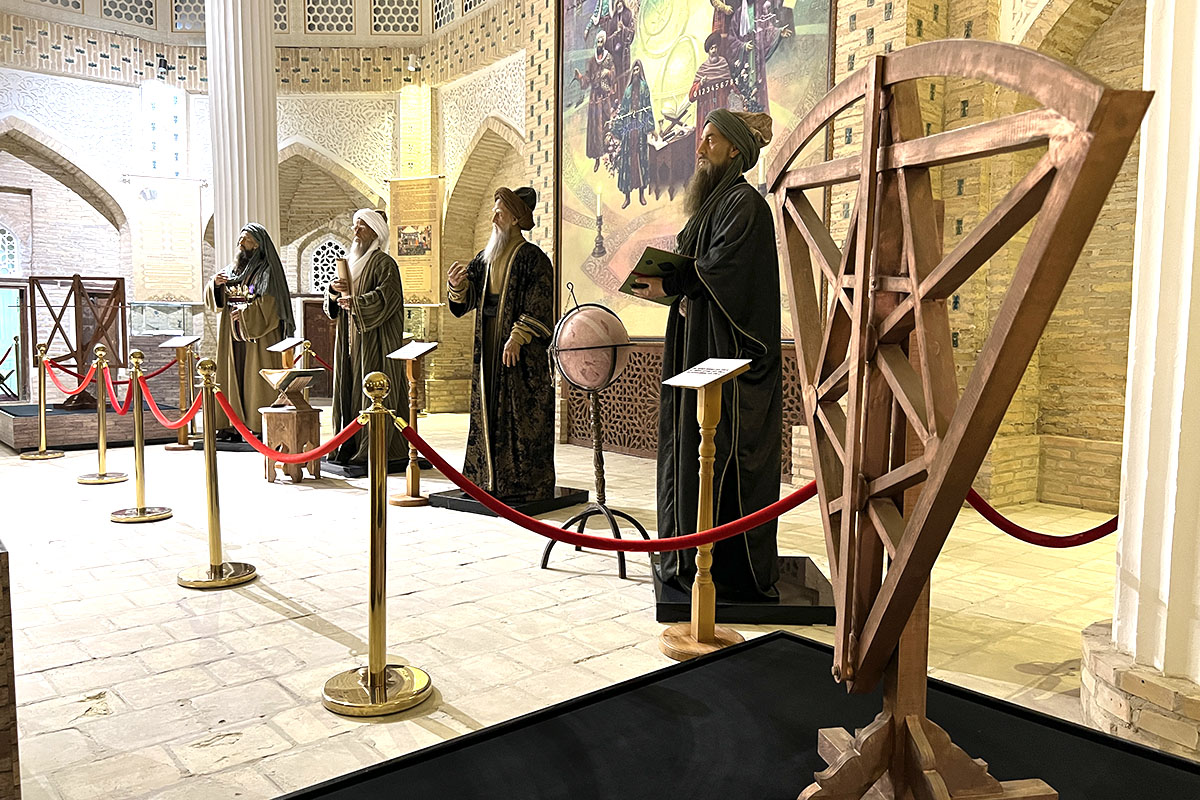
The Matpana Baya Madrasah, also known as the Museum of Scholars, is a lesser-known but historically significant site in Khiva. Built in the early 1900s, the madrasah was named after a local scholar and merchant, Matpana Baya, who was influential in the city’s cultural and intellectual life. The architecture of the madrasah follows the classic design of Khiva’s Islamic schools, with a central courtyard surrounded by cells for students, all adorned with traditional tilework.
Today, the madrasah houses the Museum of Scholars, which is dedicated to Khiva’s intellectual heritage and the achievements of its prominent scholars. The museum offers visitors a glimpse into the lives and works of the region’s great minds, with exhibits covering various fields such as literature, science, and philosophy. The peaceful atmosphere of the building allows visitors to immerse themselves in Khiva’s scholarly past while admiring the craftsmanship of its architecture.
Visiting the Matpana Baya Madrasah is a rewarding experience for those interested in the educational and cultural history of Khiva. It’s an ideal spot for anyone who wishes to learn more about the city’s intellectual traditions while enjoying a quiet, reflective space in the heart of the historic city.
Late afternoon and evening
12. Tosh-Hovli Palace (30 mins)
– Built as the residence of Khivan rulers, reflecting the opulence of the royal court
– See the intricate tilework, wooden carvings, and detailed frescoes
– Explore the palace’s inner courtyards
Start your second day at the Toshhovli Palace, or “Stone House,” a stunning example of Khivan architecture from the 19th century. Built between 1830 and 1838 by Allakuli Khan, this sprawling complex served as the Khan’s harem and his official reception hall.
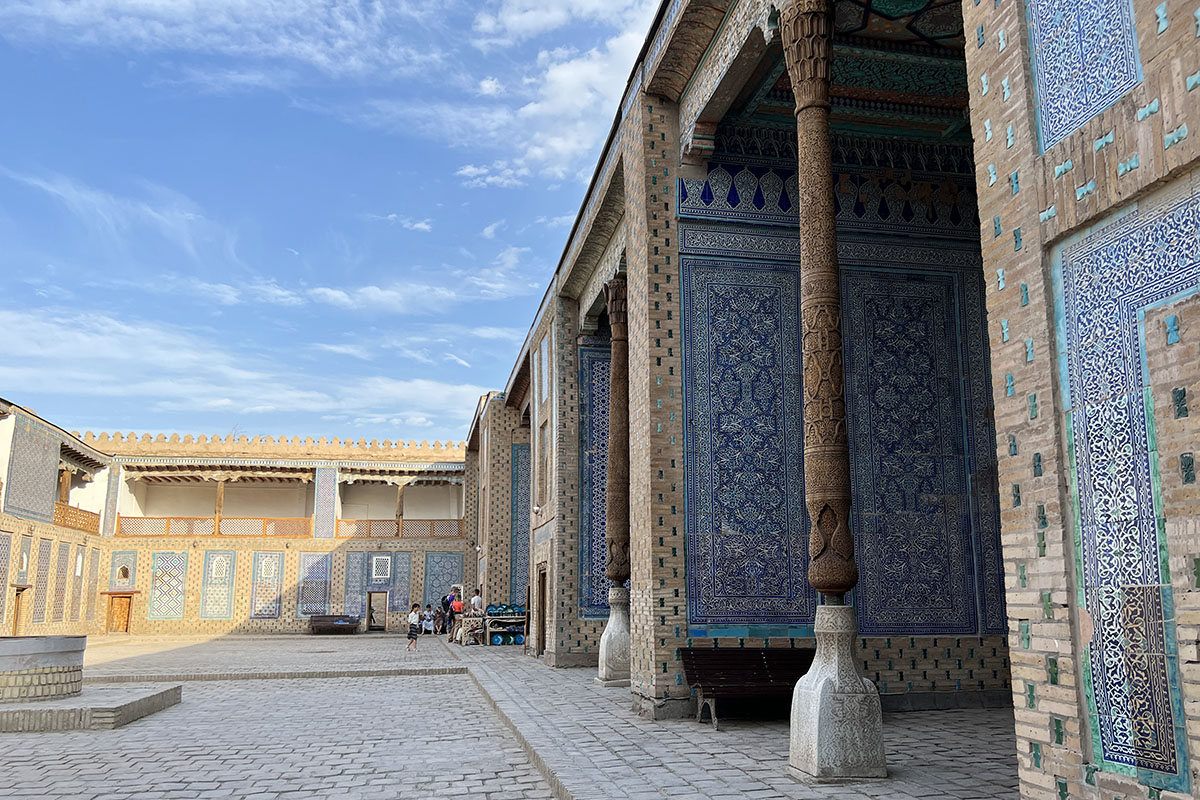
As you explore the palace’s maze-like corridors and courtyards, you’ll be struck by the intricate majolica tilework adorning its walls. The harem quarters offer insight into the lives of the khan’s wives and concubines, while the grand reception halls speak to the pomp and ceremony of the Khivan court. Don’t miss the ornate carved wooden columns and doors, masterpieces of Khivan craftsmanship.
Make sure you find the beautiful courtyards that are covered in blue tiles. Sit and enjoy the serenity.
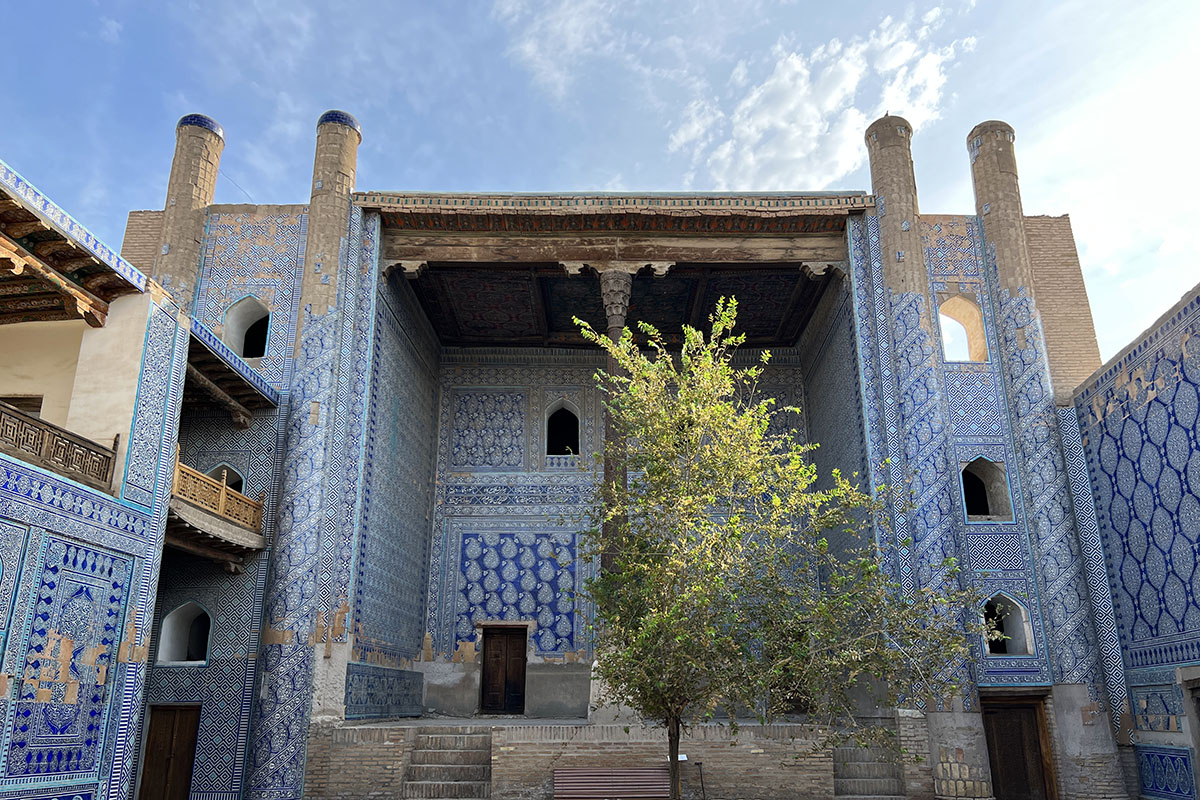
13. Kutlug Murad Inaq Madrassah (15 mins)
– First two-story madrassah in Khiva
– Courtyard well provided water to residents in the 19th century
– Burial site of Kutlug Murad Inaq, connected to an intriguing legend
The Kutlug Murad Inaq Madrassah in Khiva is a remarkable historical and architectural site, built between 1804 and 1812. Its two-story design made it one of the first of its kind in Khiva, differing from older madrasahs with fortress-like structures.
A unique feature of this madrassah is the well, located in the courtyard, which provided a crucial source of water for Khiva’s inhabitants in the 19th century.
Visitors will also be drawn to the madrassah’s historical significance. Kutlug Murad Inaq, who commissioned its construction, wished to be buried within its walls. According to legend, to honour his request, part of the city wall was dismantled to allow his body to pass through, as it was considered bad luck to bring a body through the city gates.
This fascinating story adds to the mystique of the madrassah, making it a must-visit for those interested in Khiva’s rich history and culture.
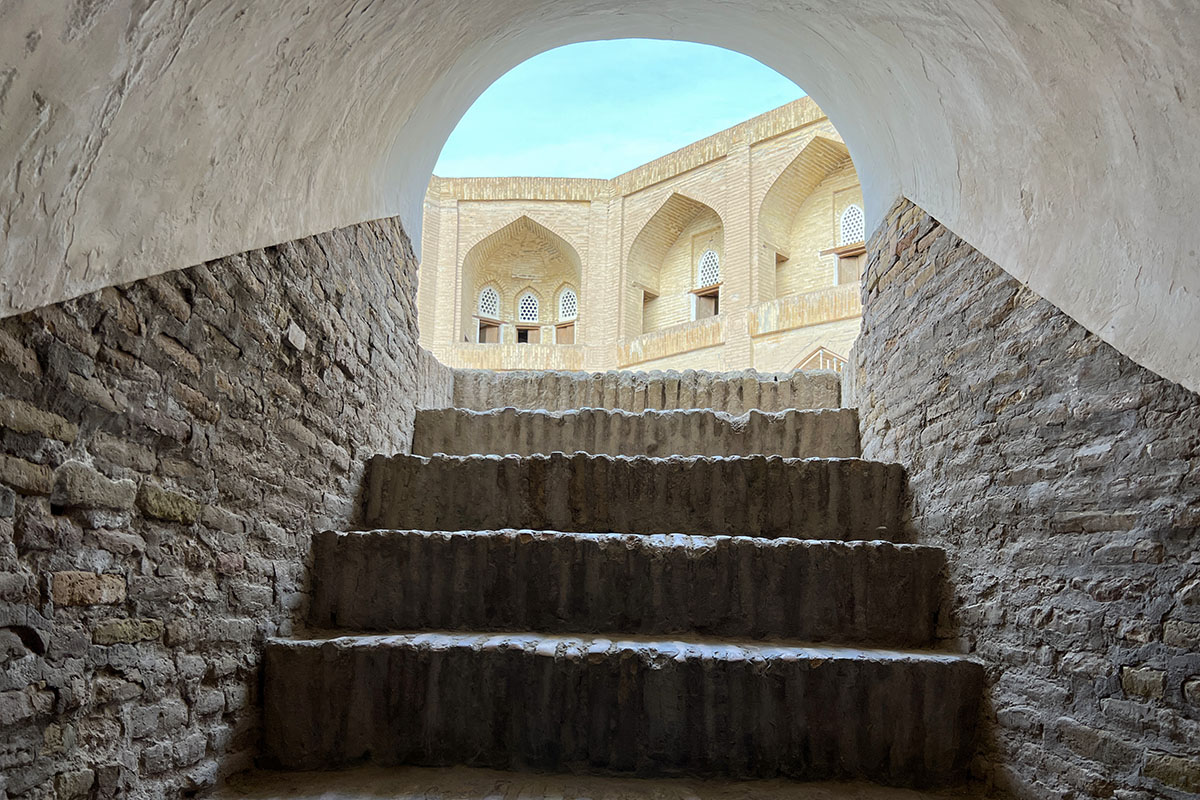
14. Museum of Handicrafts (30 mins)
– Originally, the space was reserved for the Khan’s concubines
– Visitors can explore Khiva’s handicraft traditions while immersed in royal history
The Museum of Handicrafts in Khiva is located in what was once a concubine quarters of the Tosh-Hovli Palace, built in the early 19th century under the rule of Allakuli Khan. It showcases Khiva’s rich tradition of craftsmanship, including textiles, ceramics, and intricate woodwork. The museum provides insight into the skills passed down through generations of artisans in this historic city.
There is a small museum located here, which offers a unique glimpse into both Khiva’s artistic legacy and its royal history. The combination of historical artifacts and the evocative setting of the palace adds a layer of depth to the experience for any visitor.
15. Dinner
– Dinner with a view (and maybe some entertainment)
– Sample the delicacies of Khiva
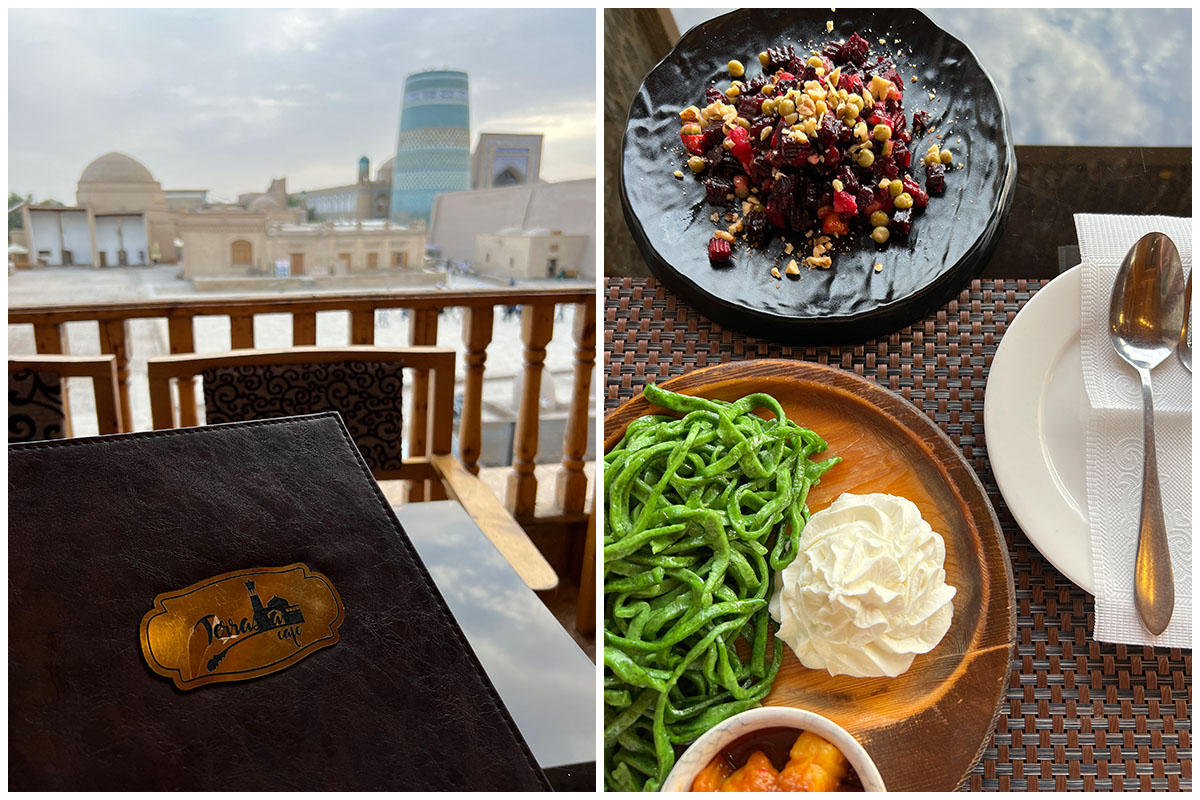
For dinner, I ate at the incredible Terrassa Restaurant. It is one of the restaurants with the most impressive views. Make sure to get a seat outside, overlooking the ark, madrassa and minaret.
I ordered the dill noodles, which is a Khiva special. Dill is widely used in Uzbek dishes. I also had a beetroot salad. The food was delicious.
As the evening wore on, a group of children started playing soccer in the courtyard below. The atmosphere was jovial and the memory holds a special place in my heart.
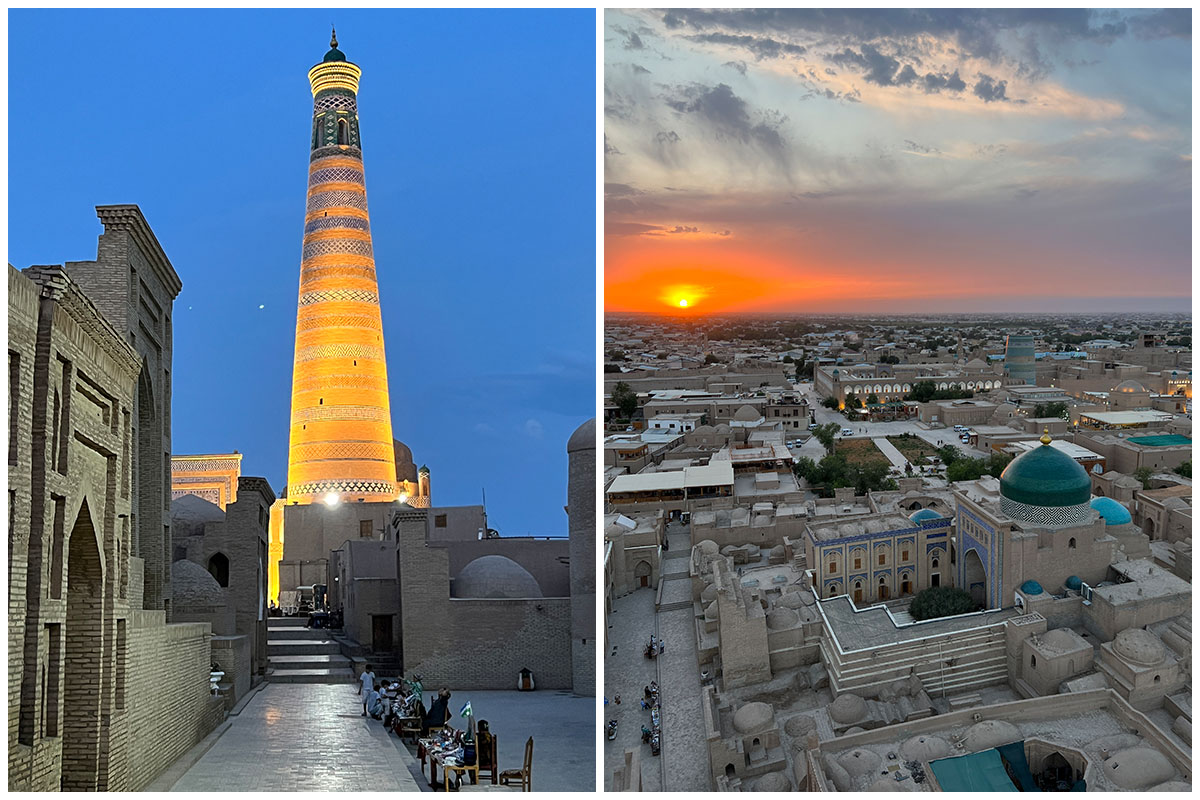
16. End the Day at Islam Khoja Minaret (30 mins)
– Climb the tallest minaret in Uzbekistan at 45 metres
– Enjoy breathtaking views of Khiva at sunset
– Additional cost to climb the minaret
Cap off your first day in Khiva with a climb up the Minaret of Islam-Khoja, the tallest structure in the city at 45 meters. Built in 1910, it’s the youngest of Khiva’s minarets but no less impressive. The climb to the top is not for the faint-hearted – the 118 steps are steep and the passage narrow – but the reward is well worth the effort.
From the top, you’ll be treated to breathtaking panoramic views of Khiva and the surrounding Khorezm region. Time your visit for sunset, when the fading light bathes the old city in a golden glow, silhouetting its minarets and domes against the sky. It’s a magical moment that captures the timeless beauty of this Silk Road city.
I would highly recommend to visit the Islam Khija Minaret to see the view from the top. Take the stairs to the top and climb the minaret to get an amazing view of the city.
Khiva to Aral Sea Tour Option
If you have an extra day, why not consider taking a day trip from Khiva to the Aral Sea?
This private tour will take you to the Tower of Silence, the Cemetery of Ships, the City of Deaths and the Regional History and Aral Sea Museum. Check it out below.
Day 2: Immerse Yourself in Khiva’s Old Town (Ichan Kala)
Today, you’re probably feeling a little tired after all the exploring of the day before! If you didn’t get to see everything yesterday, there is still time today to explore Ichan Kala.
Make sure you have a hearty breakfast as we will be walking a little bit again today.
Morning
1. Start at the Cemetery (30 minutes)
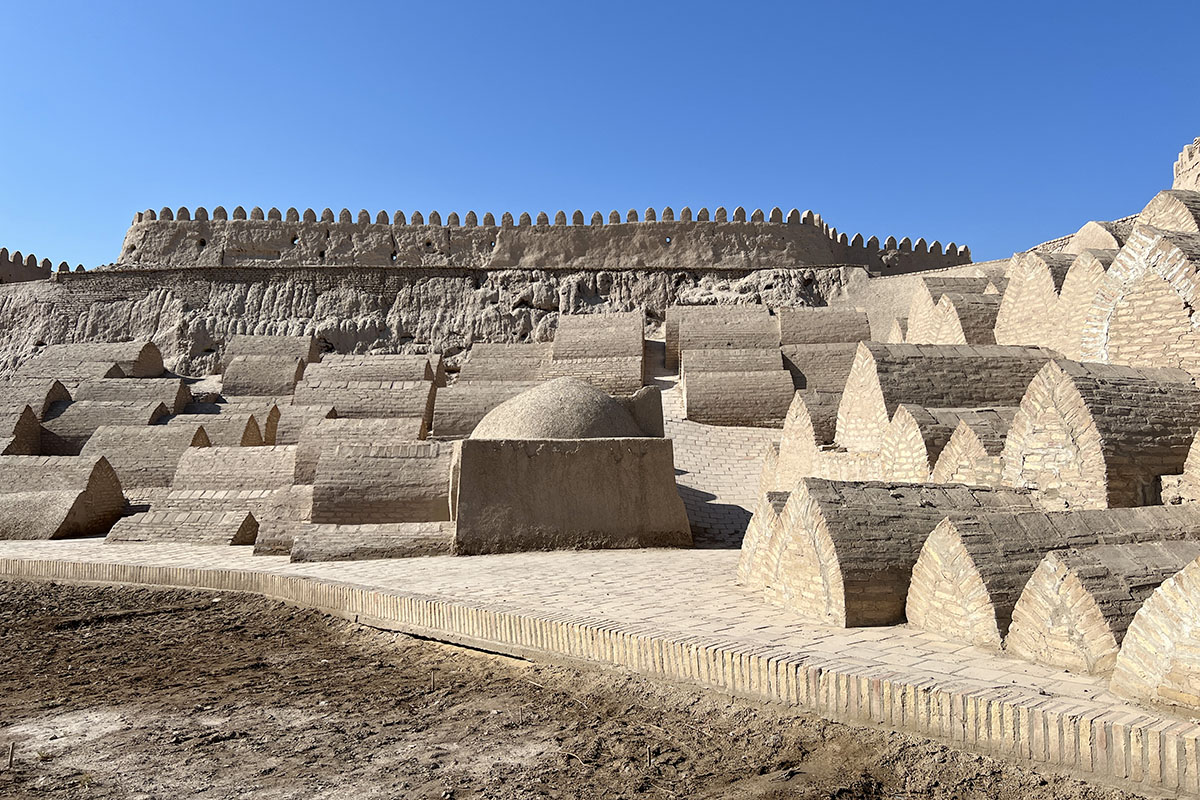
– See the tombs built into the city walls
There is little available information about the specific cemetery named “Cimitero di sud-ovest” in Khiva, but the burial tombs built into the city walls are a notable feature of the city’s unique architectural and historical landscape.
I was searching on Google Maps when I saw a reference to the cemetery and decided since it was a short walk that I would check it out. The tombs built into the city walls are absolutely fascinating.
There are some tombs also on the outside of the walls. I would really love to know more about why they are in this location and if these tombs were reserved to people of higher standing etc.
2. Experience Nurullaboy Palace (1 hour – 90 mins)
– Discover the history of the last khans of Khiva
– Enjoy the peaceful gardens
– Short walk from the walled city
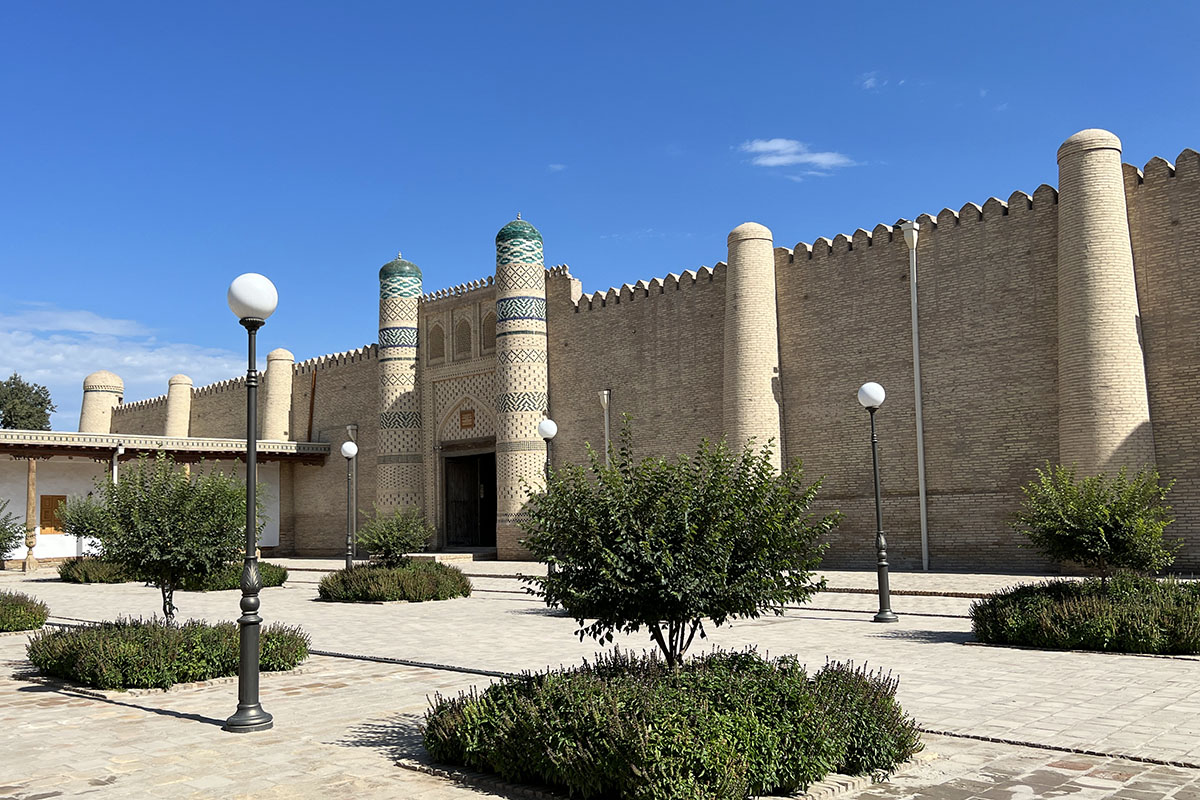
Continue your Khiva adventure at the Nurullaboy Palace Museum, located just outside Ichan Kala. This 19th-century palace complex offers a fascinating look at the later period of the Khiva Khanate, showcasing a blend of traditional Khivan and Russian architectural styles.
The palace museum houses a collection of artifacts that tell the story of Khiva’s last khans and their eventual subjugation by the Russian Empire. After exploring the exhibits, take some time to relax in the peaceful palace gardens. It’s a serene spot to reflect on your journey through Khiva’s rich history and culture.
3. Relax and recharge (1 hour)
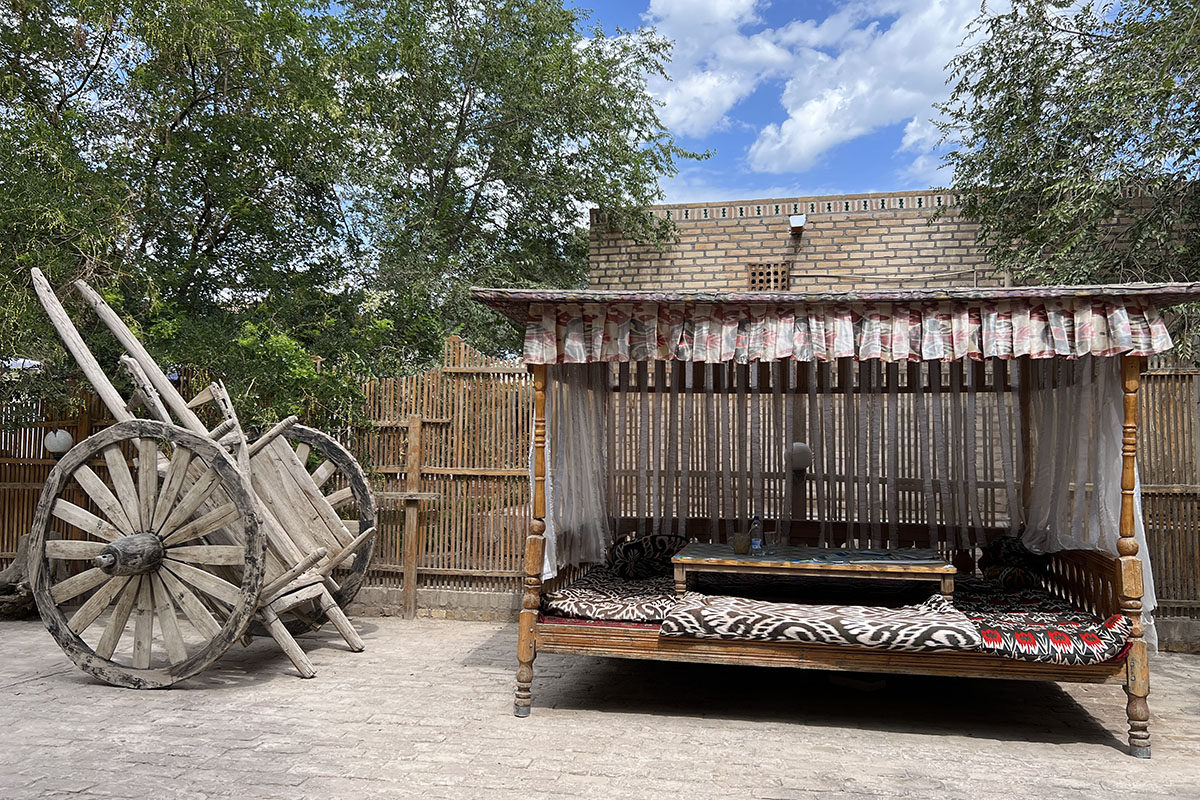
– Enjoy a drink and snack at one of the teahouses
– Relax on a traditional tapchan
Take the opportunity to relax and reflect on your trip to Khiva. You can find some of the teahouses with traditional tapchan furniture for you to use.
I chose Cafe Kheivak as the place to rest and order freshly squeezed juice. The menu has quite a few options to suit most people’s tastes.
Afternoon
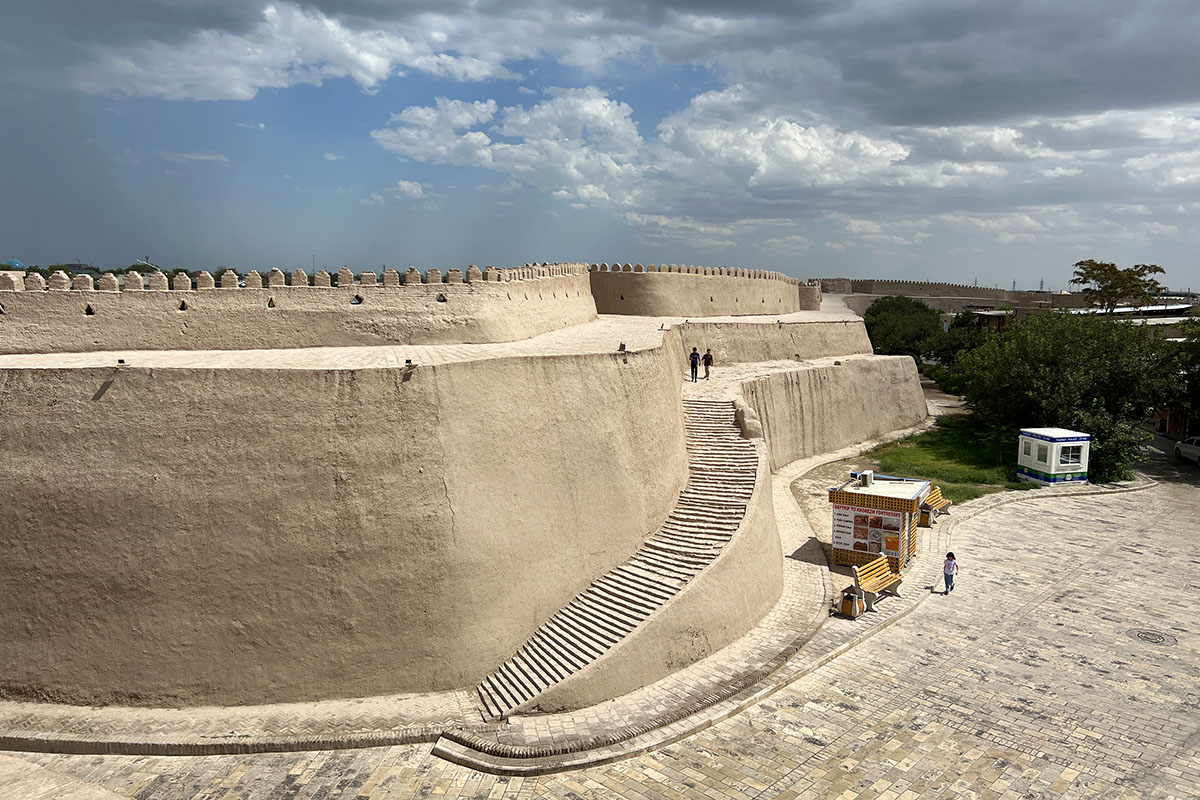
4. Walk the city walls (1 hour)
– Khiva’s walls date back to the 5th century, current structure from 17th century
– 10 meters high, 2+ kilometers long, with 40 watchtowers
– Climbing offers panoramic views and a unique historical perspective
Khiva boasts a remarkable set of fortifications that have stood the test of time. The city walls were initially constructed in the 5th century and have been rebuilt and reinforced over the centuries.
Standing at an impressive 10 meters high and stretching for more than 2 kilometers, these walls once protected the inner city from invaders and remain a testament to Khiva’s strategic importance along the Silk Road.
The current structure, dating back to the 17th century, is made of mud bricks and features many watchtowers that offer panoramic views of the surrounding landscape.
Climbing the city walls of Khiva is an unforgettable experience that allows visitors to step back in time and gain a unique perspective on this UNESCO World Heritage site. As you ascend the sturdy steps and walk along the ramparts, you’ll be treated to breathtaking views of Khiva’s old town, with its minarets, madrasas, and iconic tiled domes punctuating the skyline.
The elevated vantage point provides an excellent opportunity to appreciate the city’s intricate urban planning and architectural marvels. Moreover, timing your climb to coincide with sunset offers a magical experience as the fading light bathes the ancient mud-brick structures in a warm, golden glow, creating a truly mesmerizing spectacle.
5. Transfer to Bukhara
– Next stop – Bukhara!
– Chose either a car or train
Sadly, it is time to say farewell to Khiva. I hope ou’ve had a magical time.
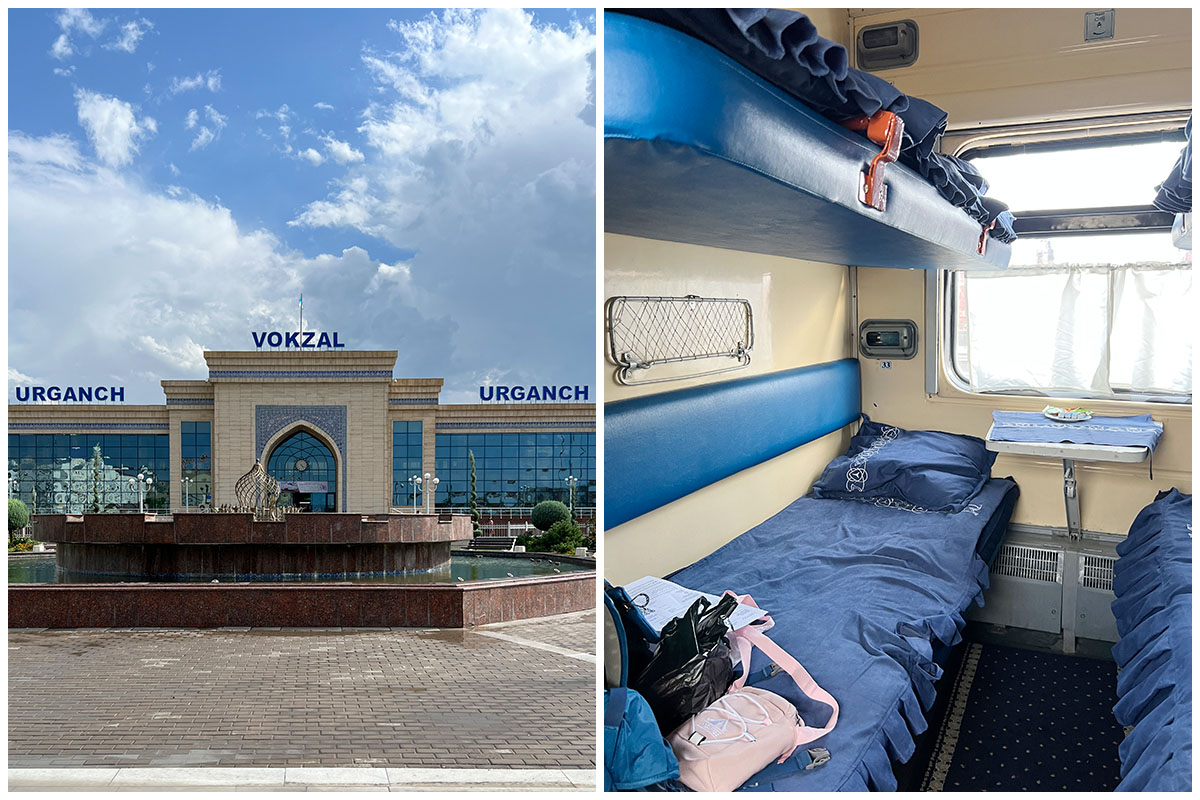
Now for the next part of your trip – travelling from Khiva to Bukhara. You can either catch a train or organise a car.
I took the train from Urgench as I wanted to experience train travel. The only sleeper accommodation that was left when I went to book was non-air-conditioned carriages! So make sure you book your ticket early!
The train ride took just over 6 hours and the whole process was very smooth and easy.
Where to Stay in Khiva
There are so many places to stay in Khiva, but my recommendation would be to stay within the walls of Ichan Kala, as it’s an amazing experience.
Zarafshon Boutique Hotel: Newly opened, this small but stylish boutique hotel inside the city walls offers modern rooms and warm hospitality. Its central location makes it ideal for exploring Ichan Kala’s highlights on foot.
Hotel Bankir Khiva: This elegant boutique hotel offers a mix of classic Uzbek design with modern amenities, just steps from Ichan Kala. Its rooftop terrace provides breathtaking panoramic views of Khiva’s famous minarets.
Orient Star Khiva: Located within a restored madrassa inside Ichan Kala, this hotel blends history with luxury. Staying here feels like an immersive experience of Khiva’s architectural heritage, with all its modern comforts.
Hotel Arkanchi: Just inside Ichan Kala, this hotel offers spacious rooms and a rooftop restaurant with picturesque views of the city’s ancient skyline. It’s perfect for those wanting to stay close to the historic core while enjoying high-end amenities.
Zukhro Boutique Hotel: A short walk from Ichan Kala, this boutique hotel combines Uzbek traditional style with a contemporary touch, offering personalized service in a quiet, luxurious setting.
Tips for Your Khiva Visit
- Explore Khiva by Foot: Khiva’s old town, Ichan Kala, is compact and best explored on foot. Enjoy strolling through its ancient streets.
- Use Yandex or Local Taxis for Quick Trips: While Khiva is small, Yandex and local taxis are great for short rides, especially if you’re staying outside the old city.
- Dress Modestly for Religious Sites: Many of Khiva’s landmarks are religious in nature. Respect local customs by dressing modestly when visiting mosques and madrassas.
- Bring Cash for Local Markets: Cash is king in Khiva, especially when buying souvenirs from the bustling bazaars or local vendors.
- Learn a Few Uzbek Phrases: Even in tourist-friendly Khiva, a few basic Uzbek phrases can go a long way in connecting with locals and enhancing your experience.
- Plan for Nearby Excursions: If you have extra time, consider a day trip to nearby sites like the ancient fortresses of Toprak-Kala or Ayaz-Kala in the Kyzylkum Desert.
For more tips and information read this article:
Ultimate Uzbekistan Travel Guide – Travel Tips and Important Information
By following this 2-day itinerary in Khiva, you’ll experience the best of its rich history and culture within the walls of the Ichan Kala. From the towering minarets to the intricate tilework of the palaces, you’ll get a true feel for Khiva’s unique charm. If time allows, extend your stay to savour the city’s slower pace before heading to Uzbekistan’s other gems like Bukhara, Samarkand, or Tashkent.
Remember, Khiva isn’t just a stop on the Silk Road—it’s a destination worth lingering in. Whether you have 1 day or more, this travel guide will help you make the most of your visit to one of Uzbekistan’s most captivating cities.
Further Reading
Ultimate Uzbekistan Travel Guide – Travel Tips and Important Information
The four best places to visit in Uzbekistan
From Monuments to Markets: One Day in Tashkent Itinerary
Experience Ancient Bukhara: Ultimate Bukhara 3 Day Itinerary
Delights of Samarkand – Perfect 3 Day Samarkand Itinerary